
Japanese and Slovenian accomplices agreed to two arrangements in Ljubljana on Tuesday that make ready for participation being developed and research of robotised restoration gadgets.
Fujita Health University marked one of the accords with the University of Ljubljana and the other with the Ljubljana-based URI Soča Rehabilitation Institute, and Toyota Motor Corporation.
The marking was gone to by Economy Ministry State Secretary Aleš Cantarutti, who commended it as a noteworthy clearing stone for further participation among Slovenia and Japan in the field.
“Collaboration among Slovenia and Japan has seen colossal improvement as of late,” said Cantarutti, applauding the understandings as a “magnificent case of participation among science and research and business”, and another chance to redesign restorative recovery mechanical autonomy.
Respective participation was likewise applauded by Japanese Ambassador to Slovenia Masaharu Yoshida, who noticed that Fujita Health University was a main foundation in the field in Japan. The college works Japan’s biggest college emergency clinic, treating 1.83 million patients per year.
“The understanding marked today will enable us to locate a typical way being developed of recovery robots and, most importantly, to put them available,” said Robert Cugelj, executive general of URI Soča.
The organization’s primary objective is to get its ability and innovation into this present reality, and sell it. “Along these lines we create worth included for the most part for patients, both those from Slovenia and somewhere else,” said Cugelj.
The leader of the organization’s innovative work office, Zlatko Matjačić, exhibited two undertakings that framed the reason for collaboration.
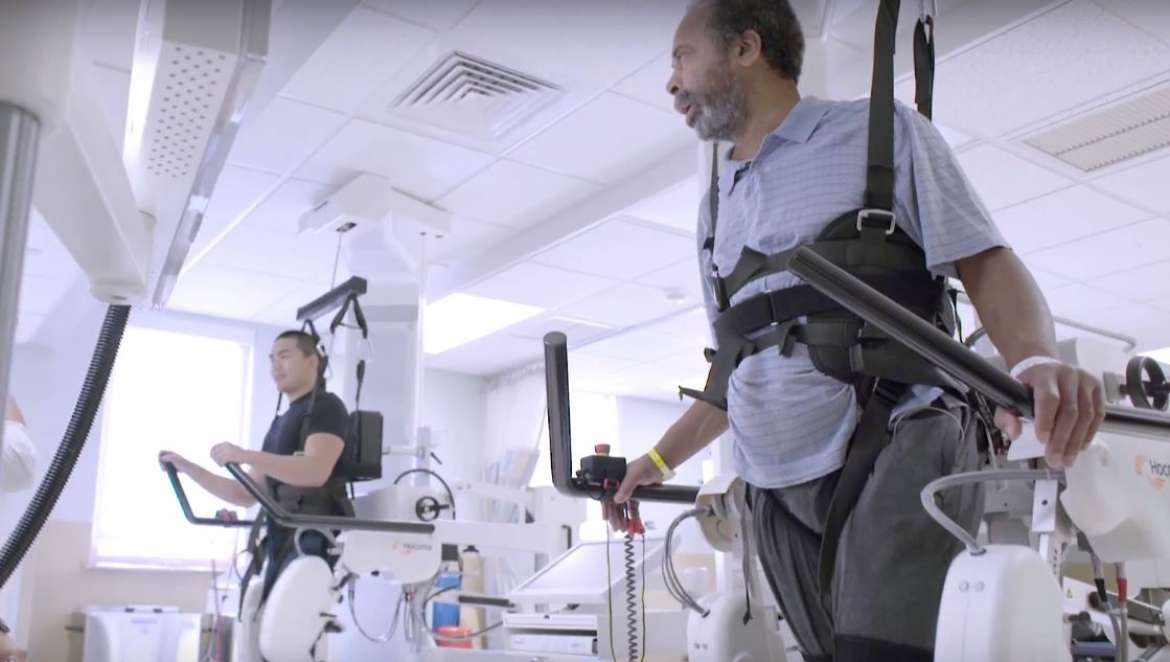
One is a recovery robot to prepare patients how to keep up equalization and development coordination during strolling, which is being created by the Slovenian establishment, and the other is a robot created by Fujita Health University and Toyota.
These are two exoskeletal gadgets concentrating on two distinct regions. “The Japanese have concentrated on the leg’s capacity and backing during walk, while we’re concentrating on the incorporated capacity of equalization and coordination,” Matjačić said.
They might now want to consolidate their mastery, innovation and experience into a now idea to help in the restoration of patients after stroke..